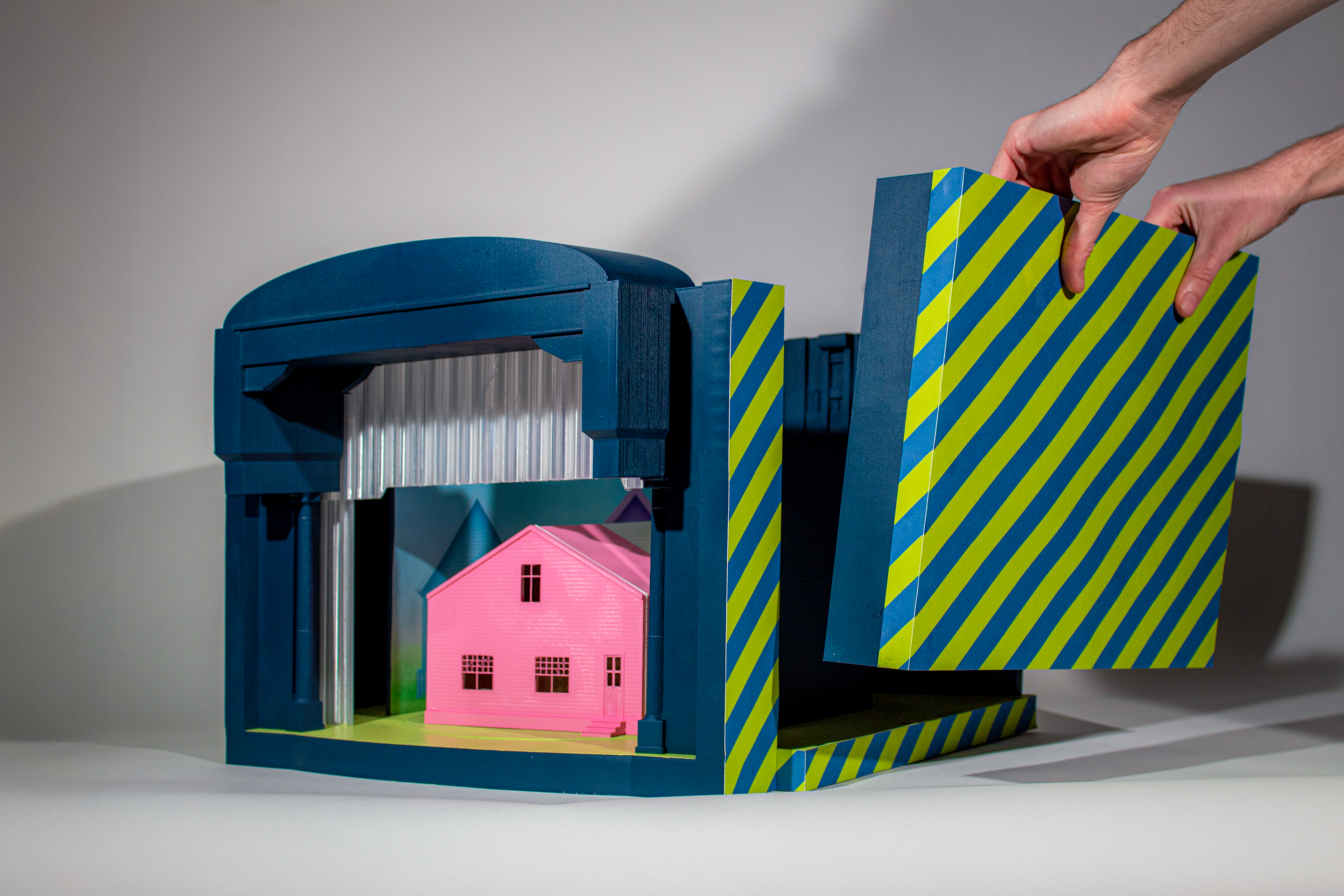
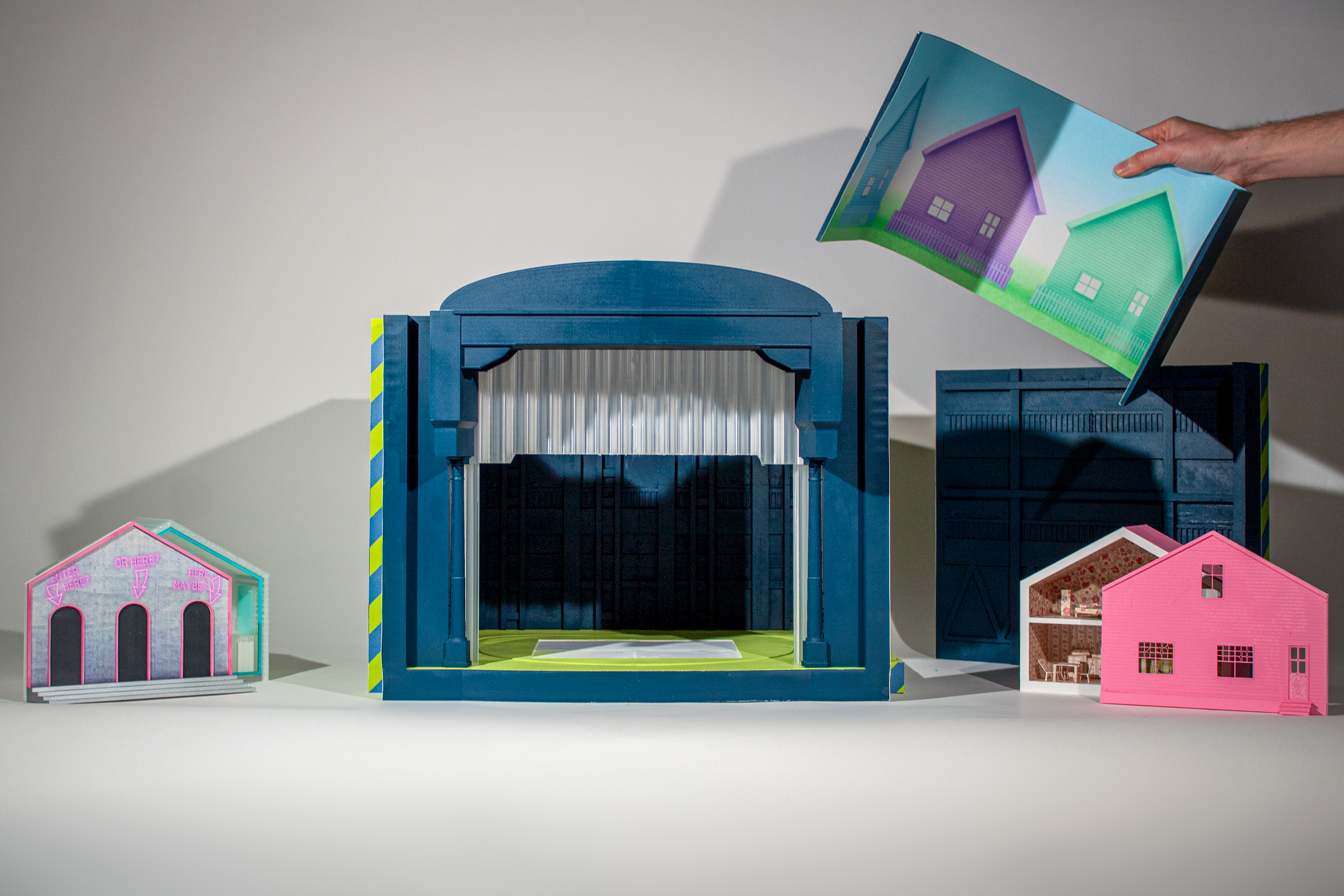
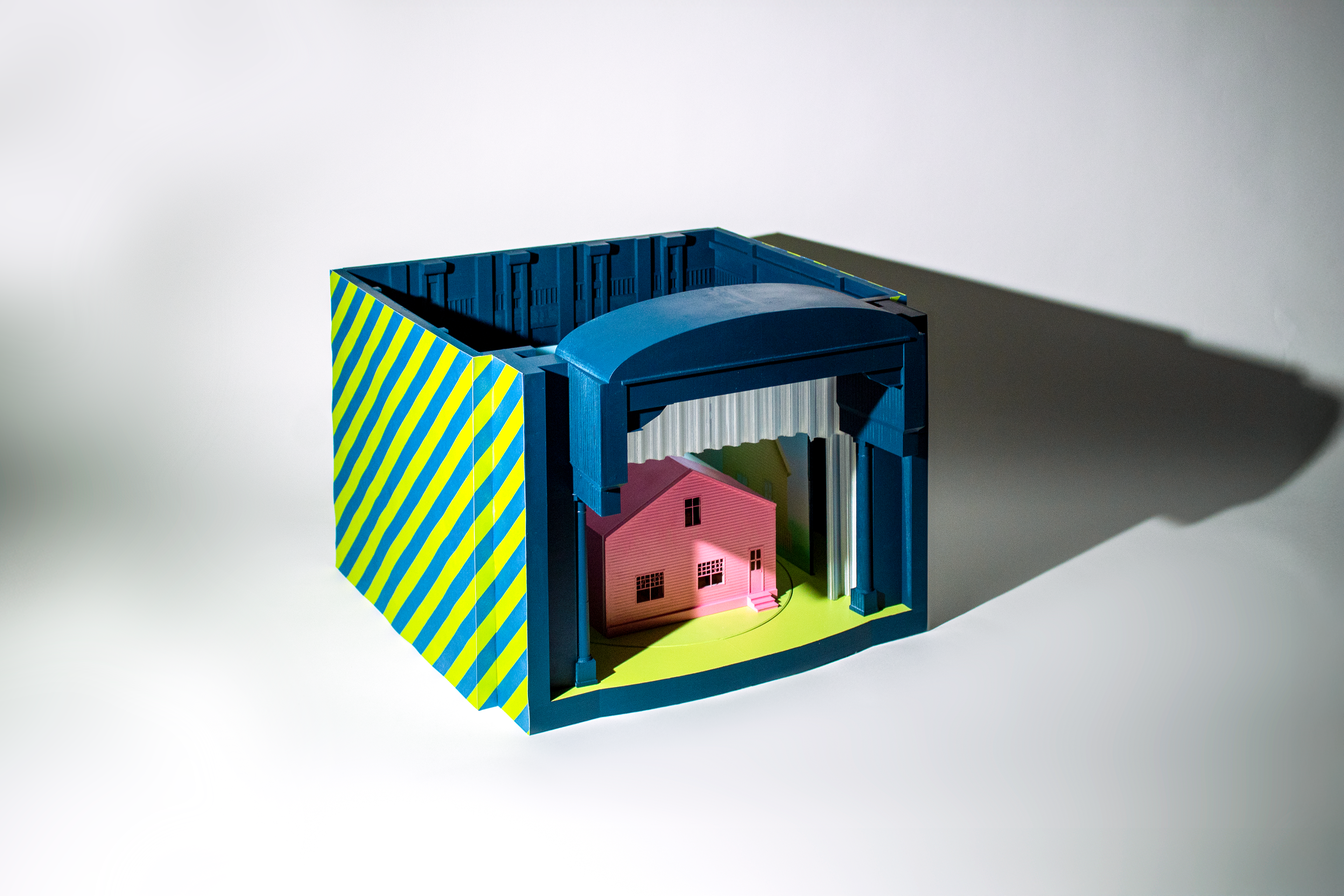
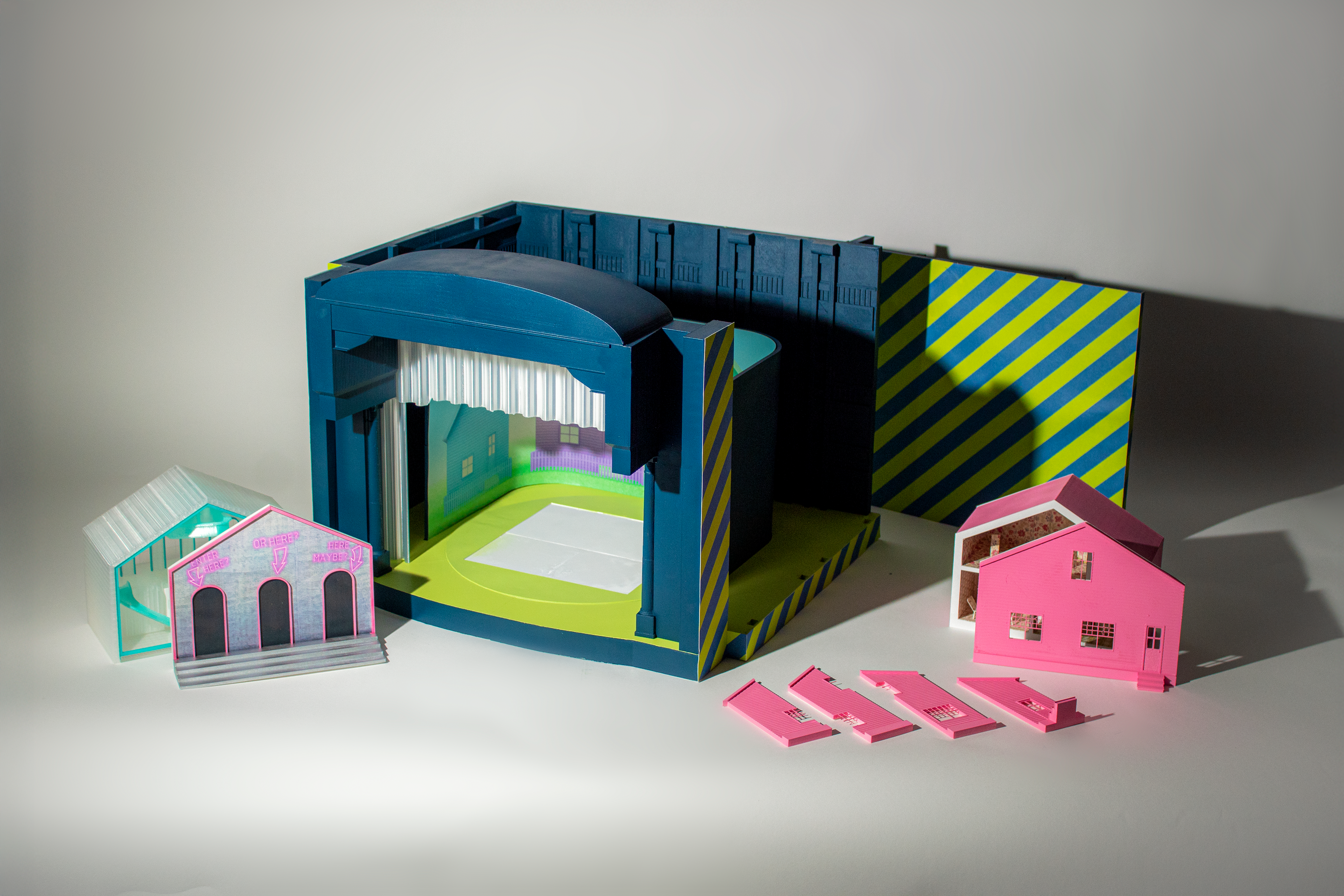
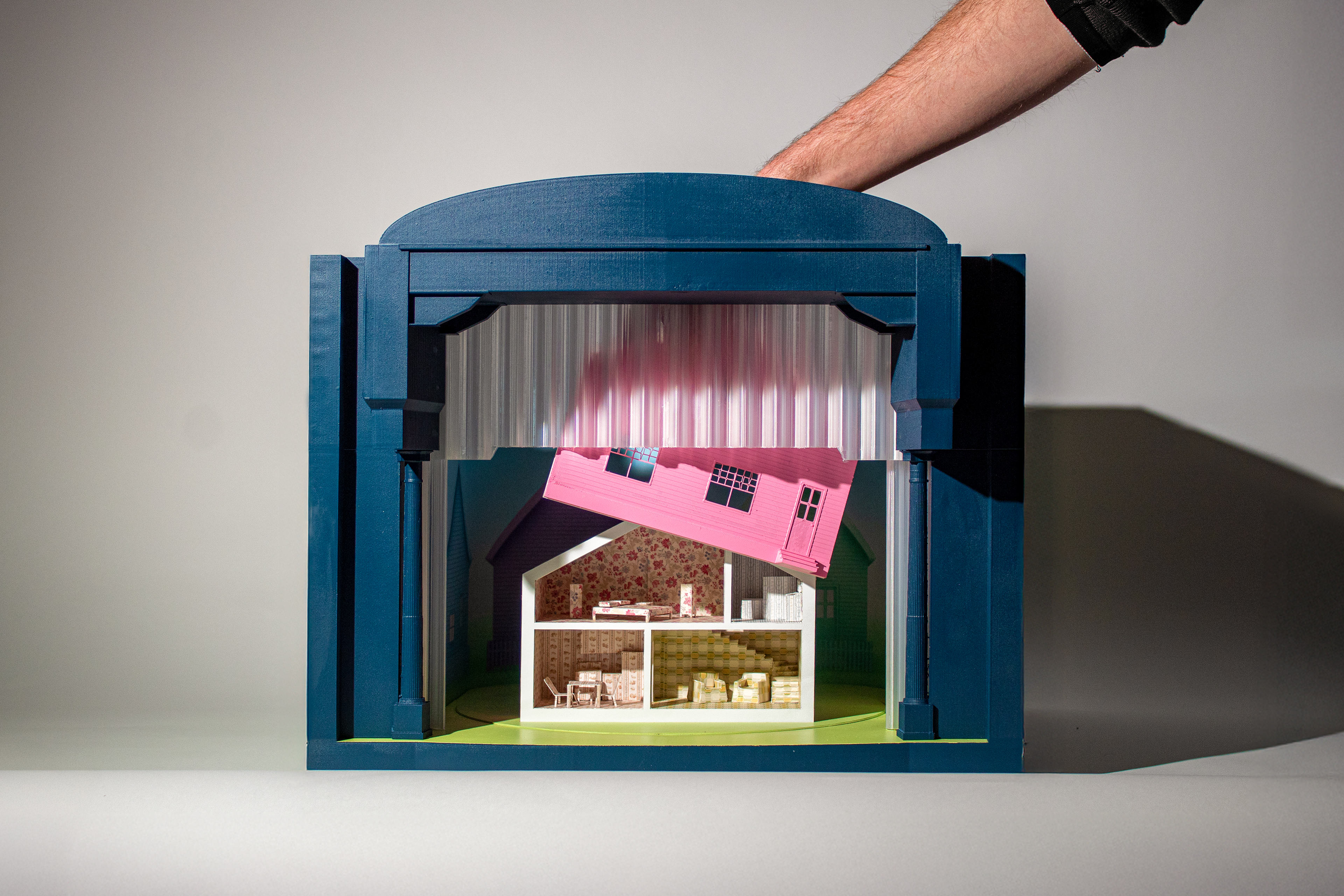
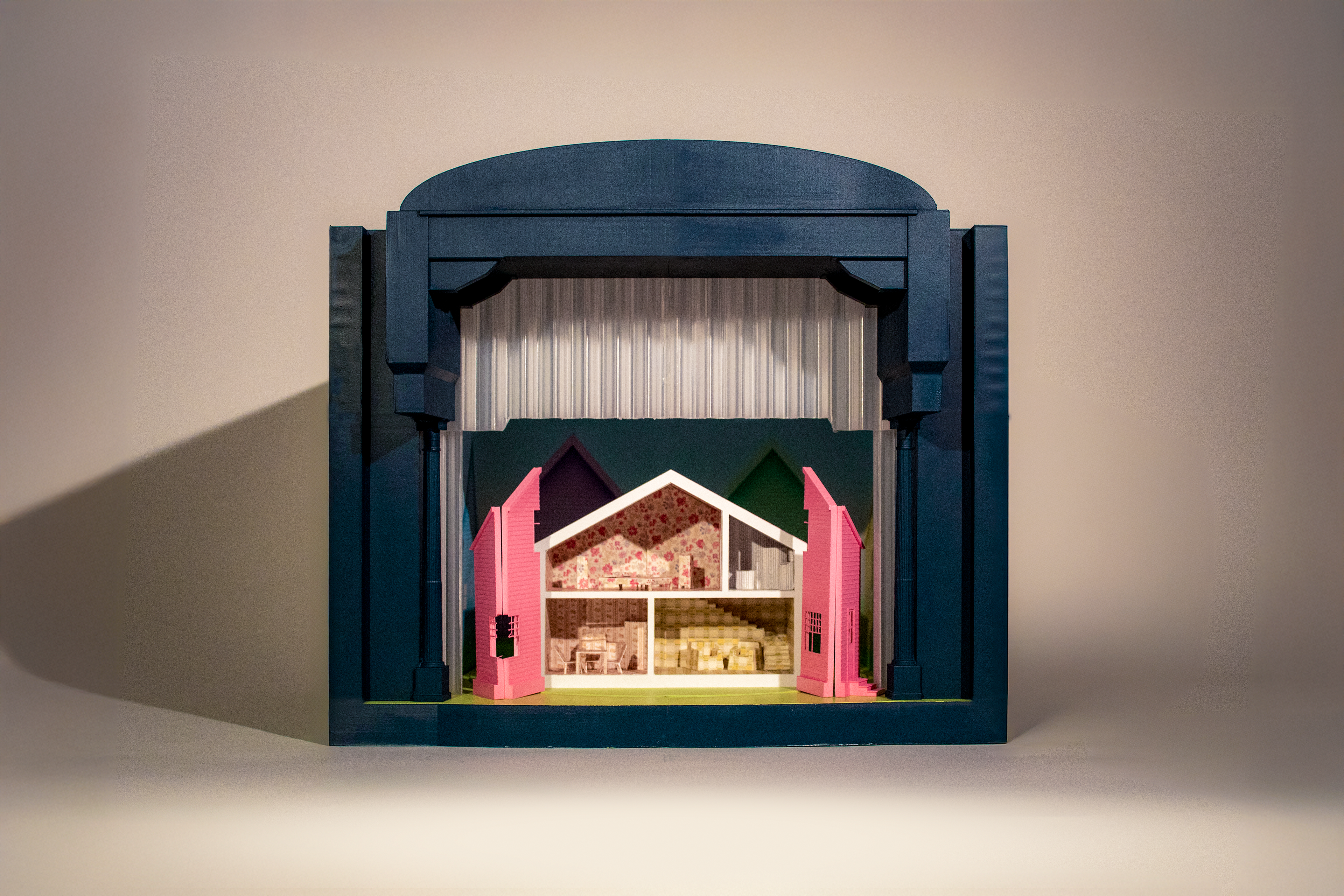
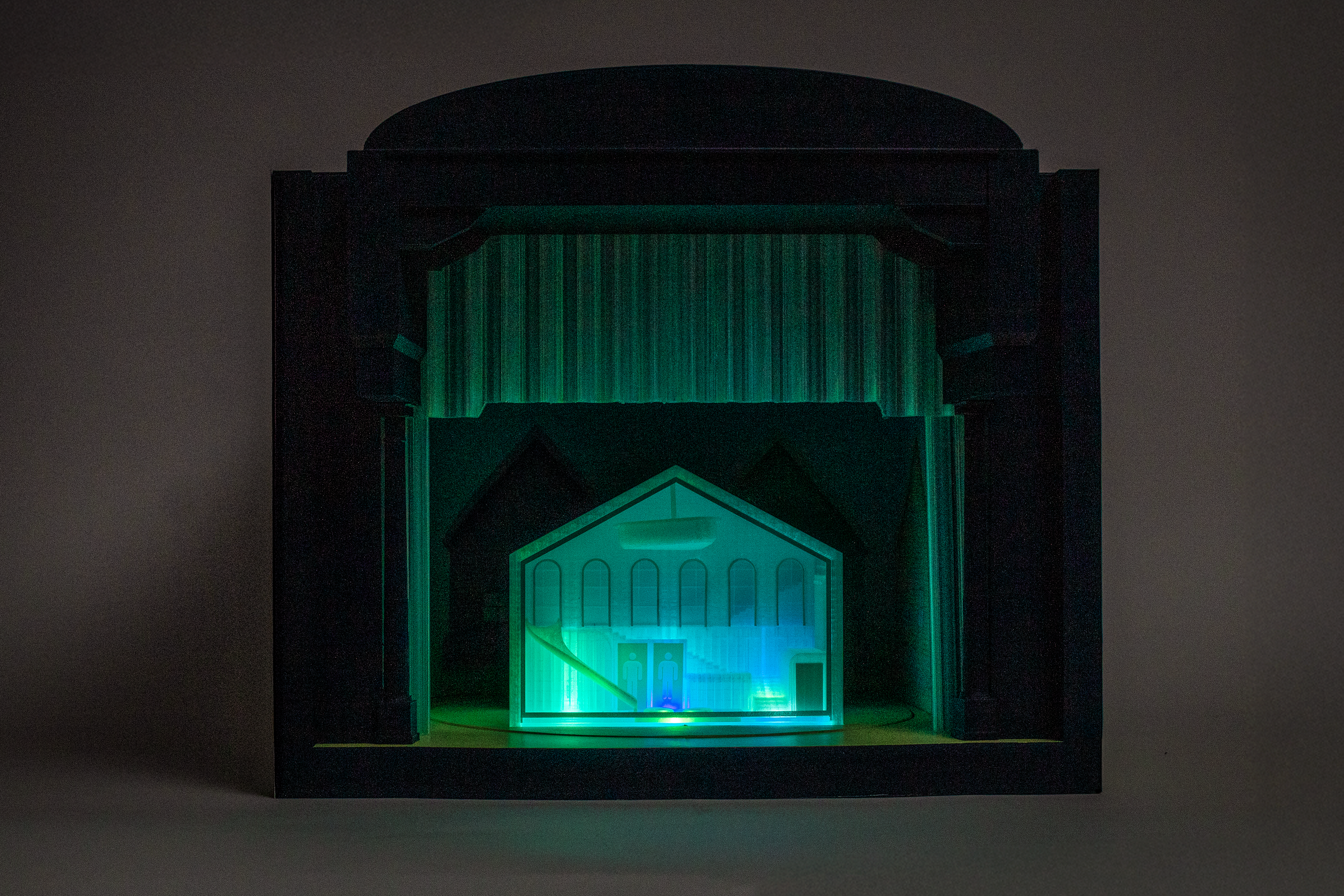
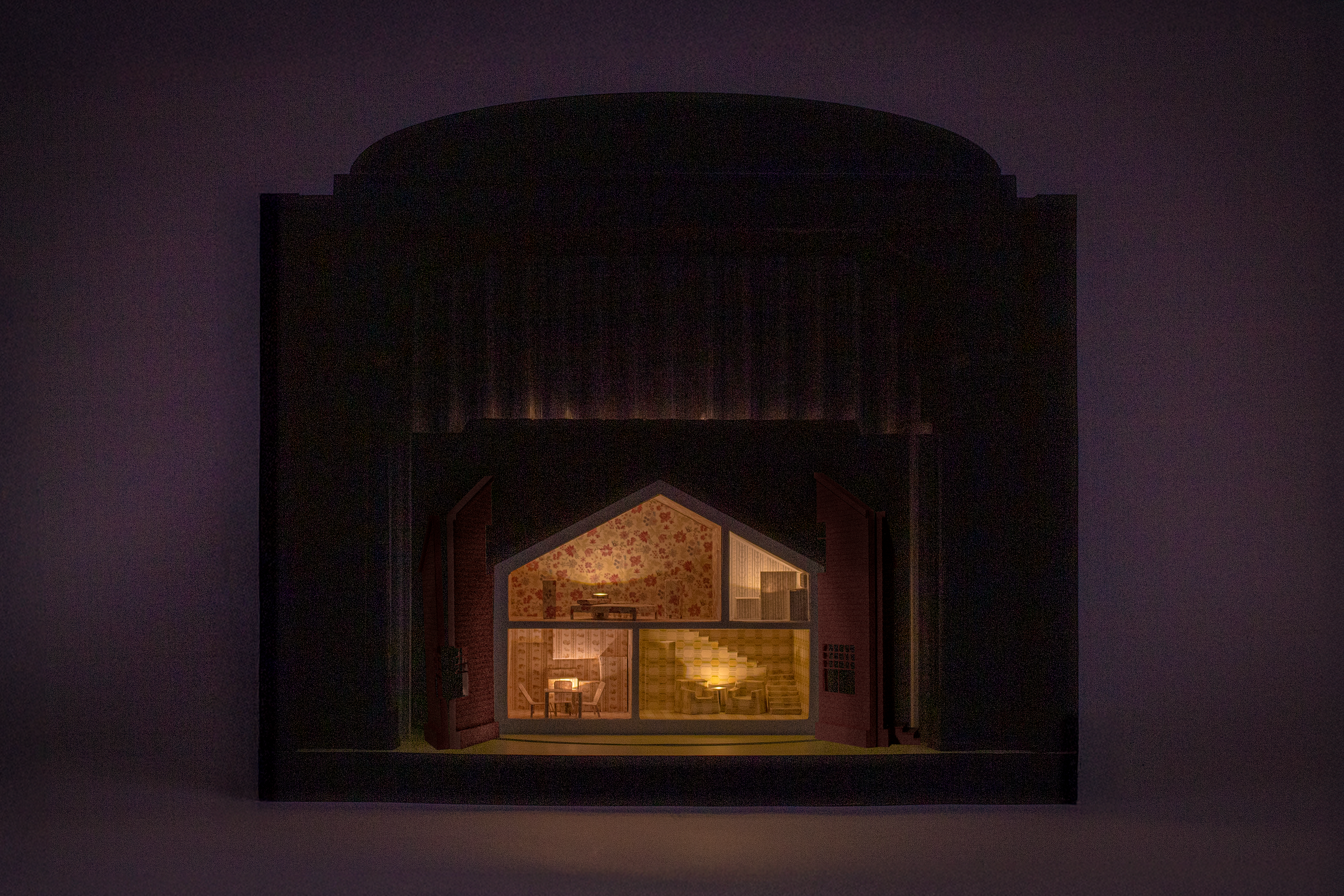
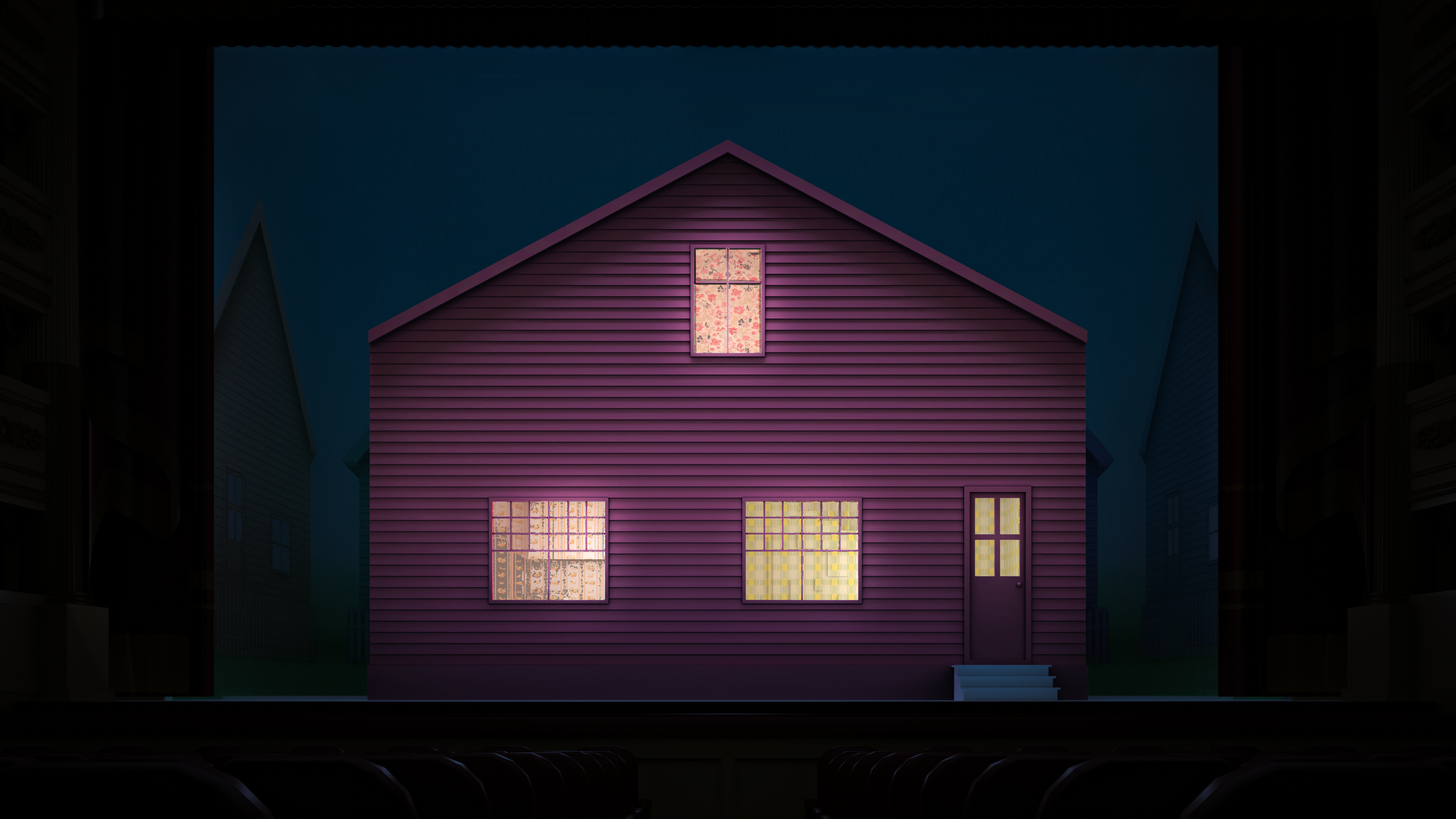
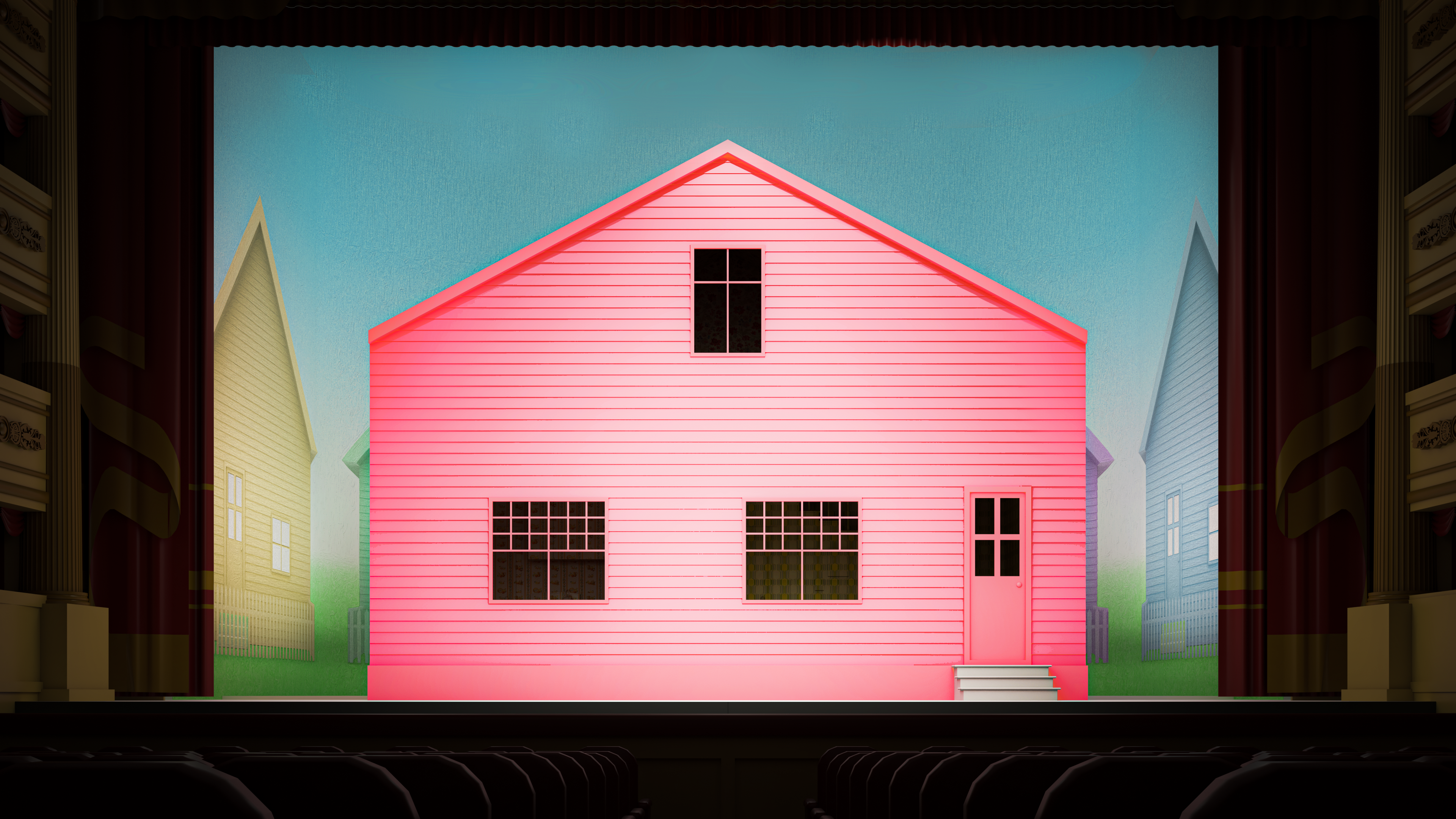
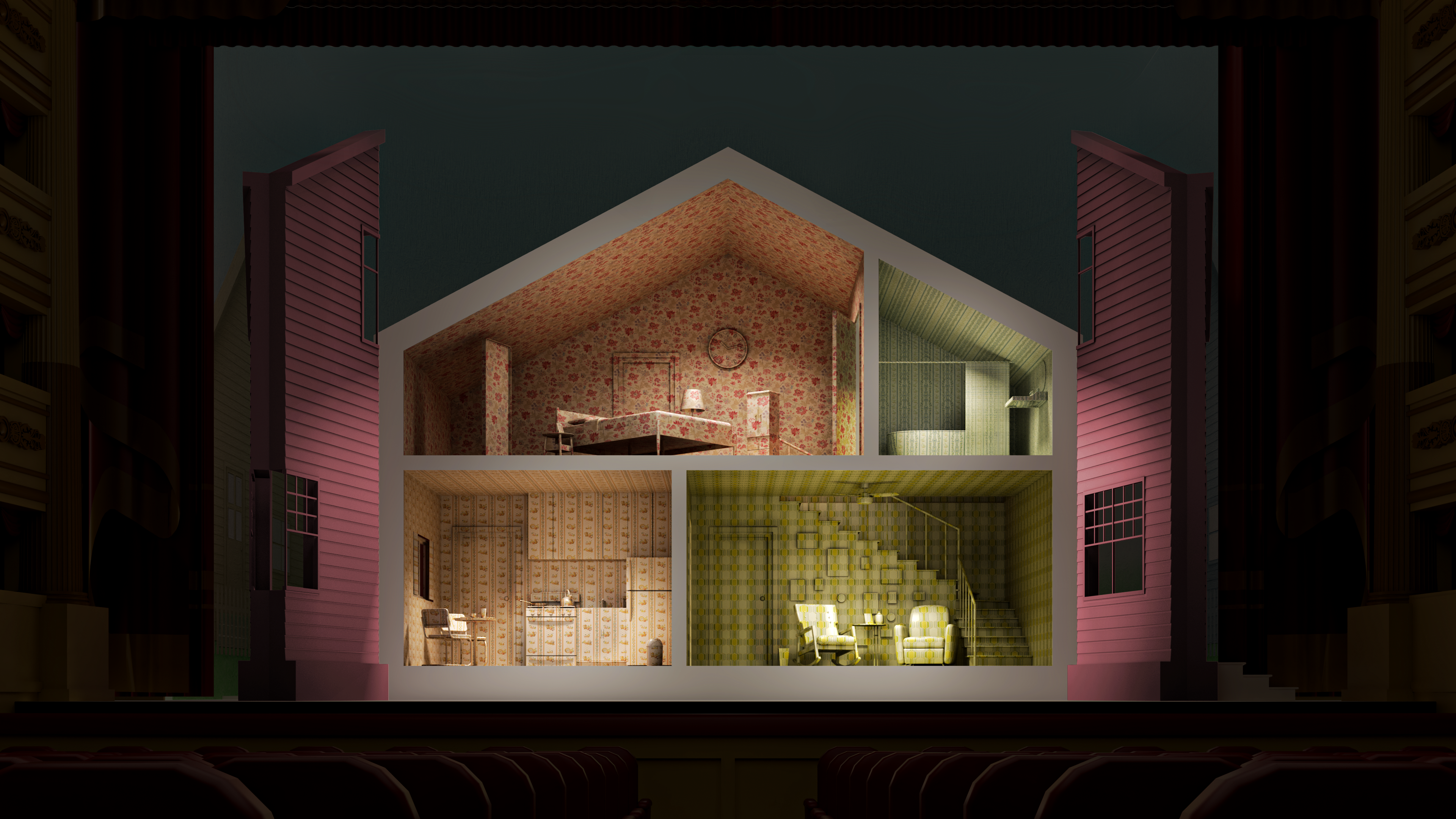

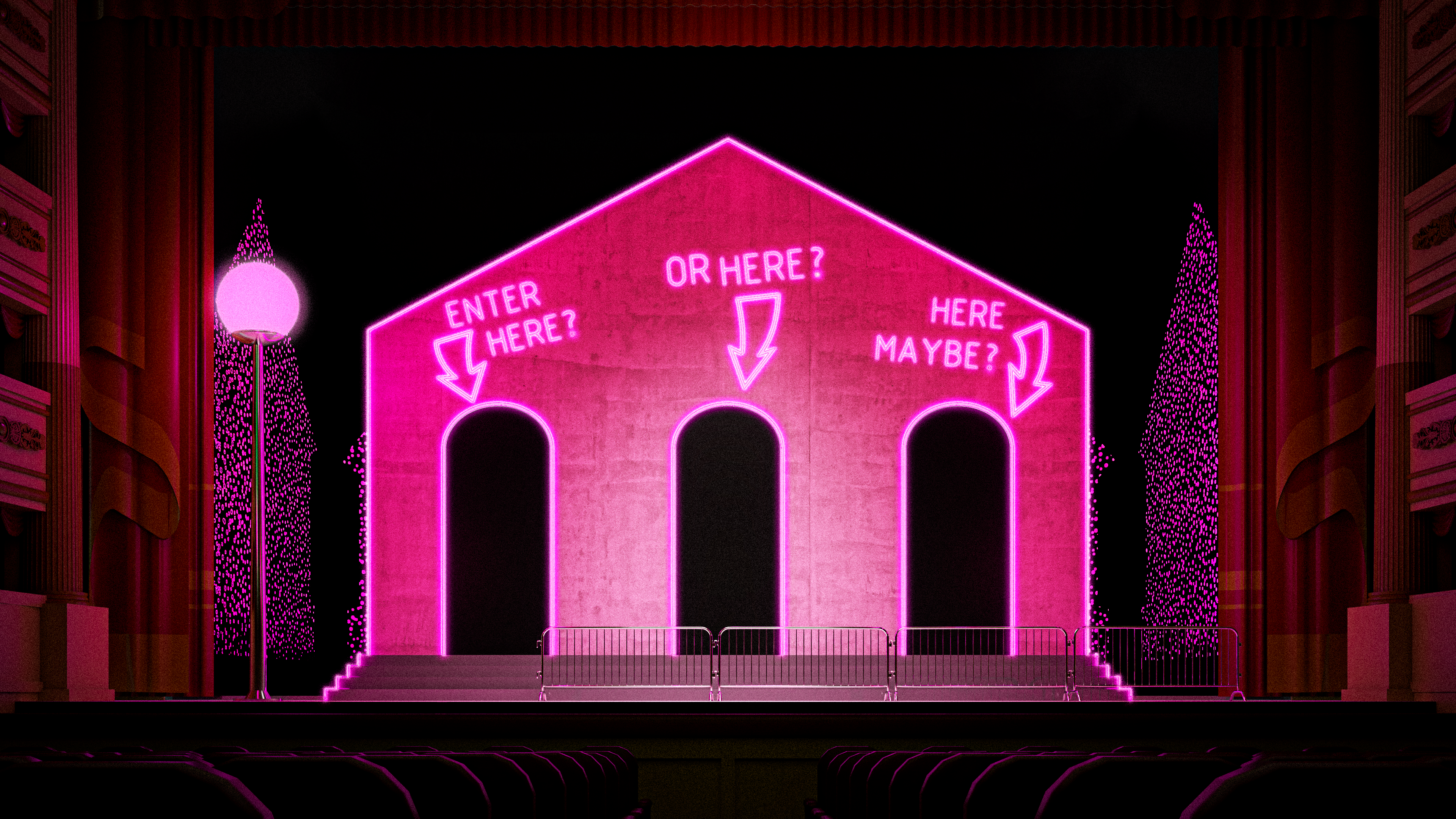
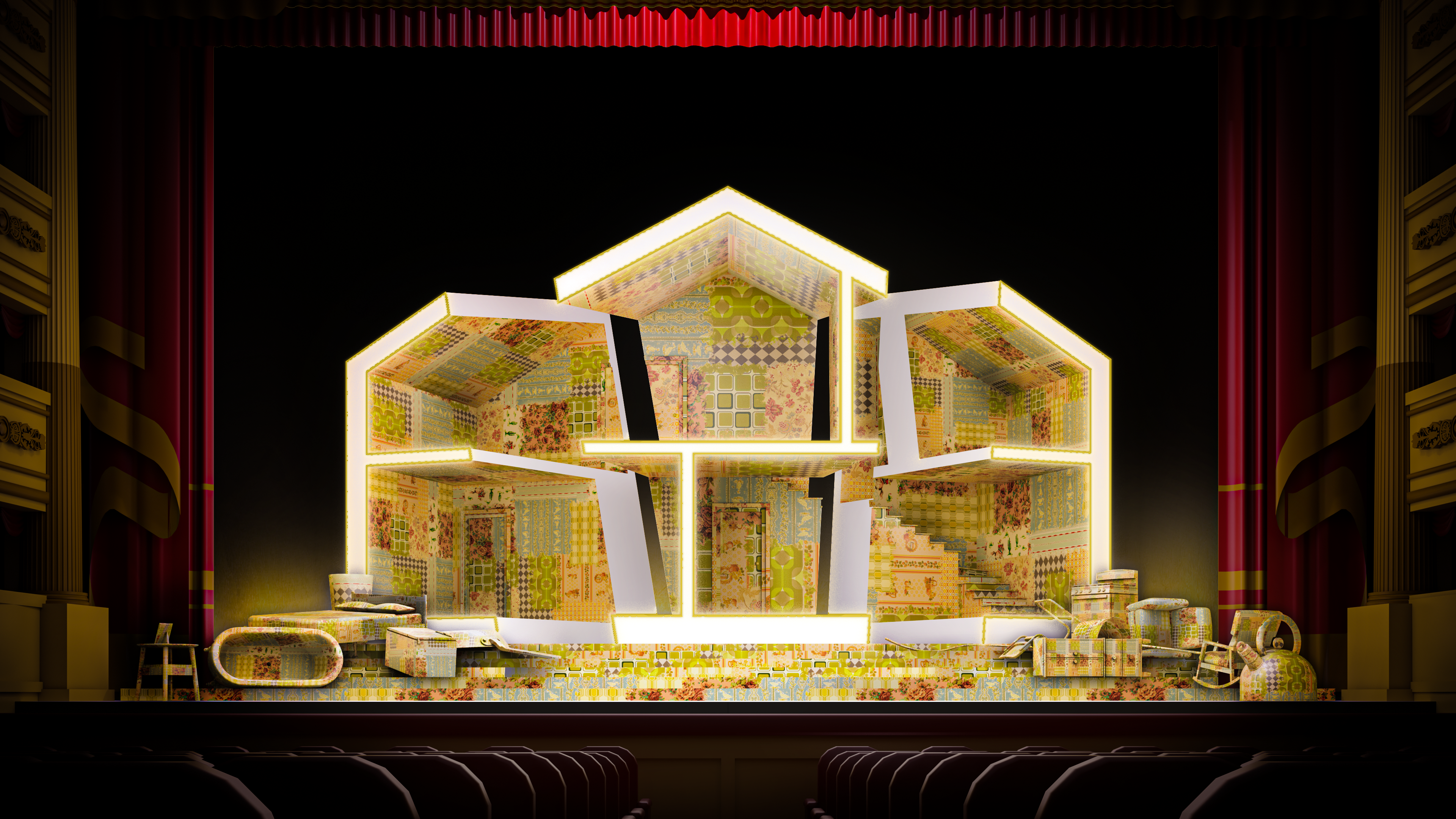


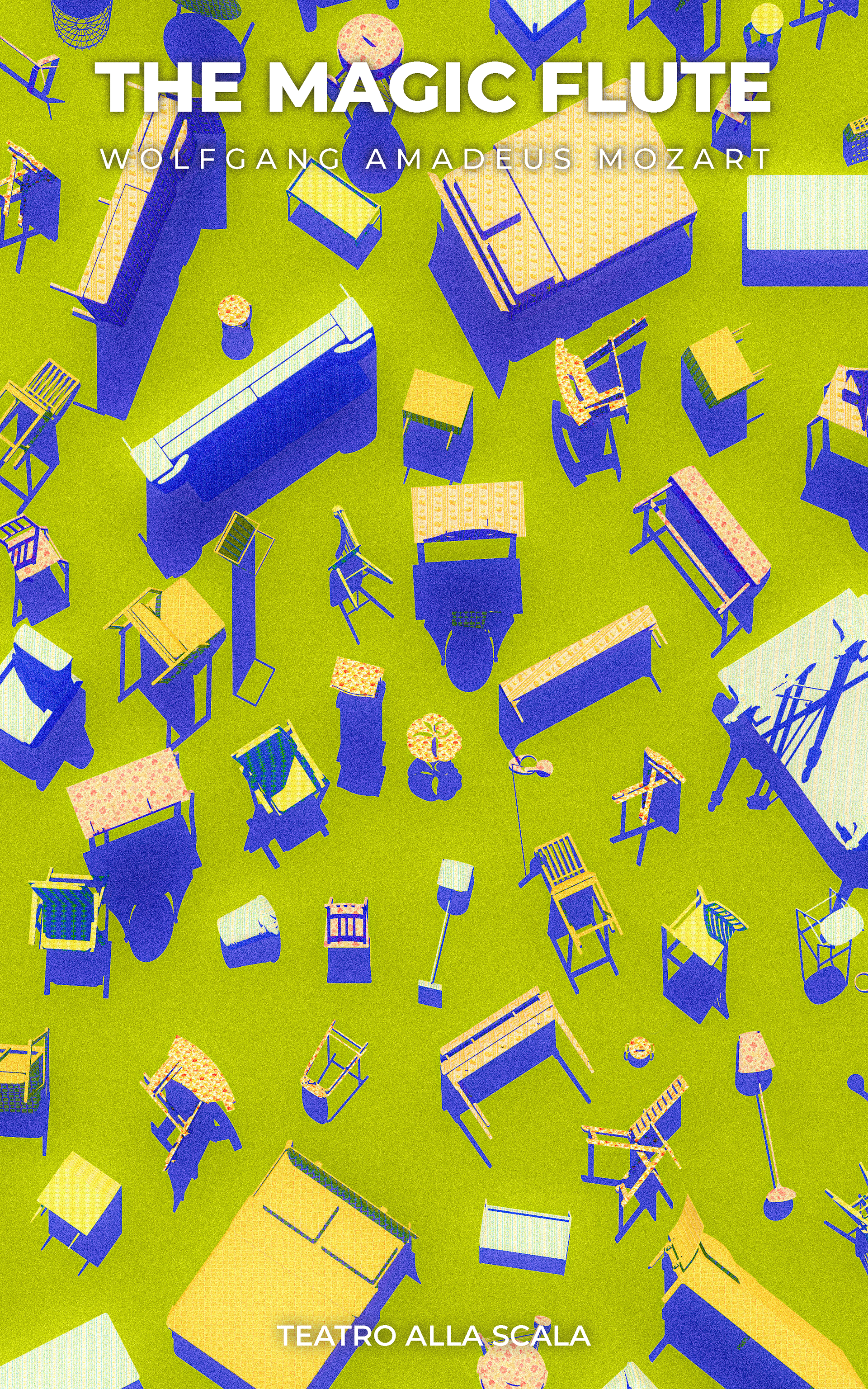
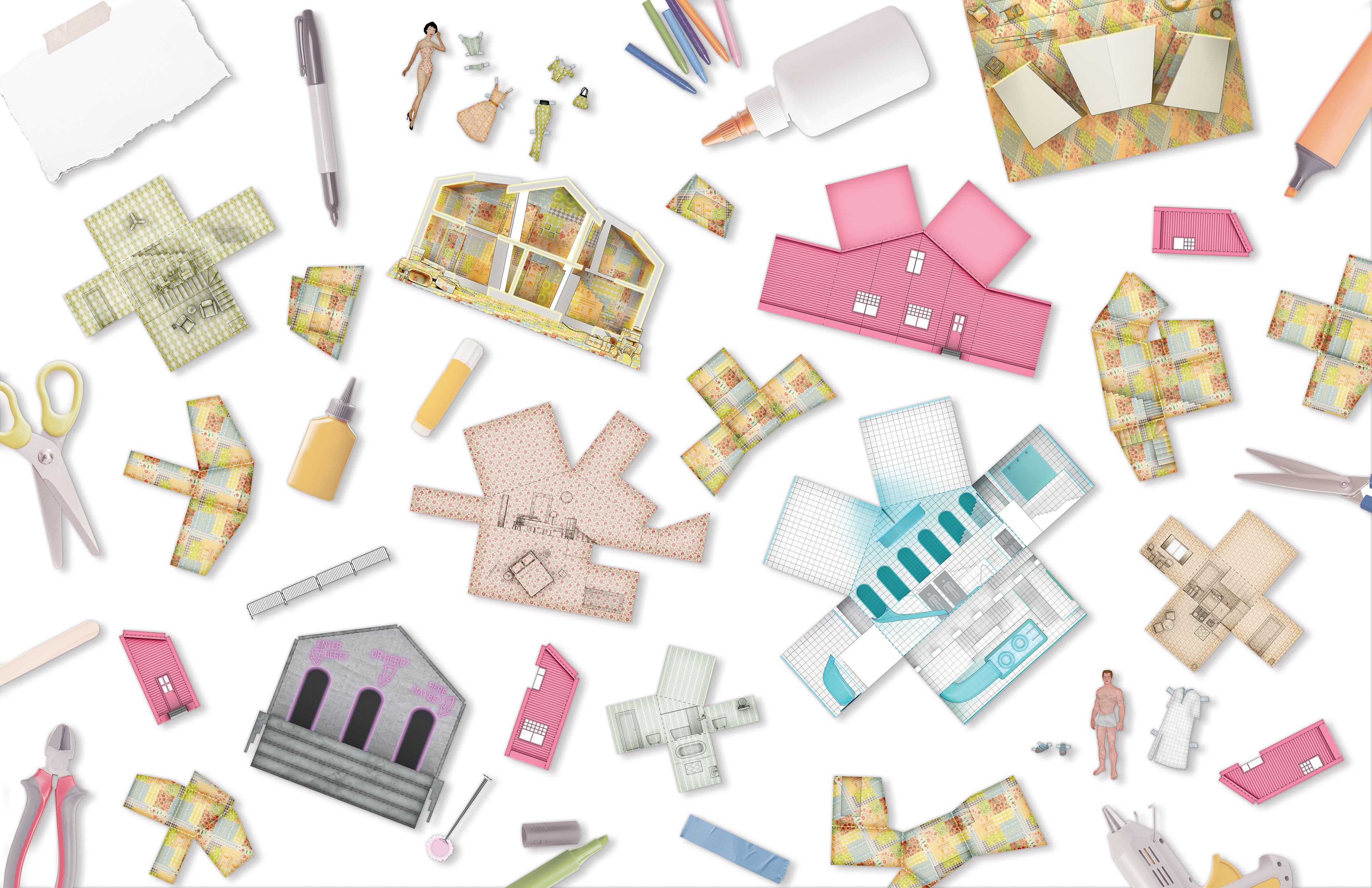
The Magic Flute has cemented itself year after year as part of the canon; however, the themes of masculinity and total indoctrination of a belief system are rarely addressed on the stage, leaving an opportunity for critical assessment through the set design. This design for Mozart’s “The Magic Flute” reframes this opera as a critique of the restrictions of domesticity and conservative values. In the first scene, the Queen of the Night, is reimagined as a housewife and overbearing mother to her teenage daughter Pamino, and her domain is a plastic, pastel, and ultimately dry version of the typical American suburb. The kitschy wallpaper covering the interior of the house entraps both the Pamina and the Queen of the Night into normative roles of the wife and daughter. The second set, Sarastro’s temple, contrasts with the first set and acts as a symbol of the counterculture. Now framed as a blush neon bathhouse, Sarastro’s temple explores themes of voyeurism, pleasure, and ultimately, the conflict between what is considered right and wrong. In the finale of the opera, the set is broken, furniture and wallpaper are scattered, disoriented, and out of scale, symbolizing the resolution of the dark and night and the end of (the) play.