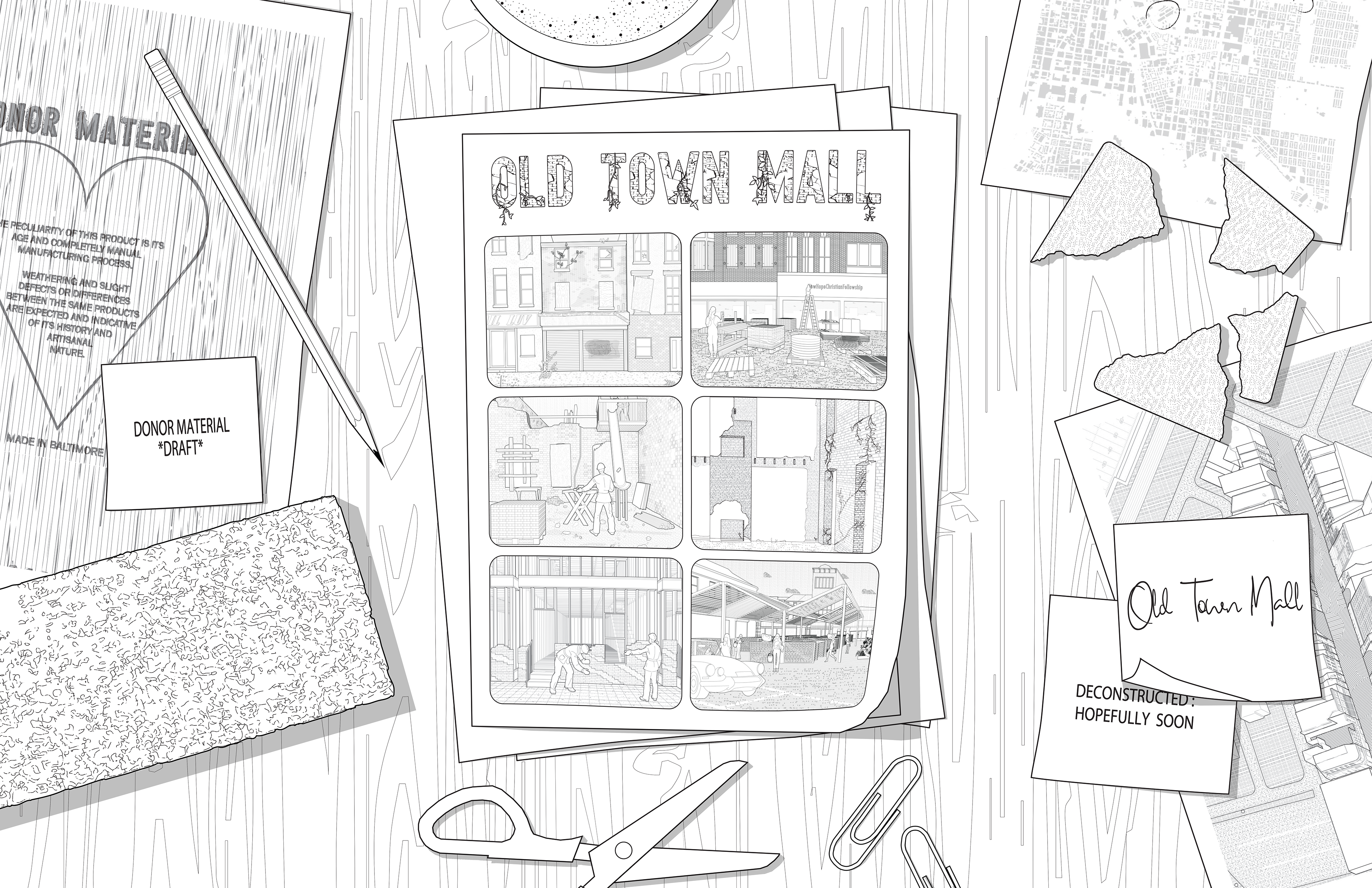
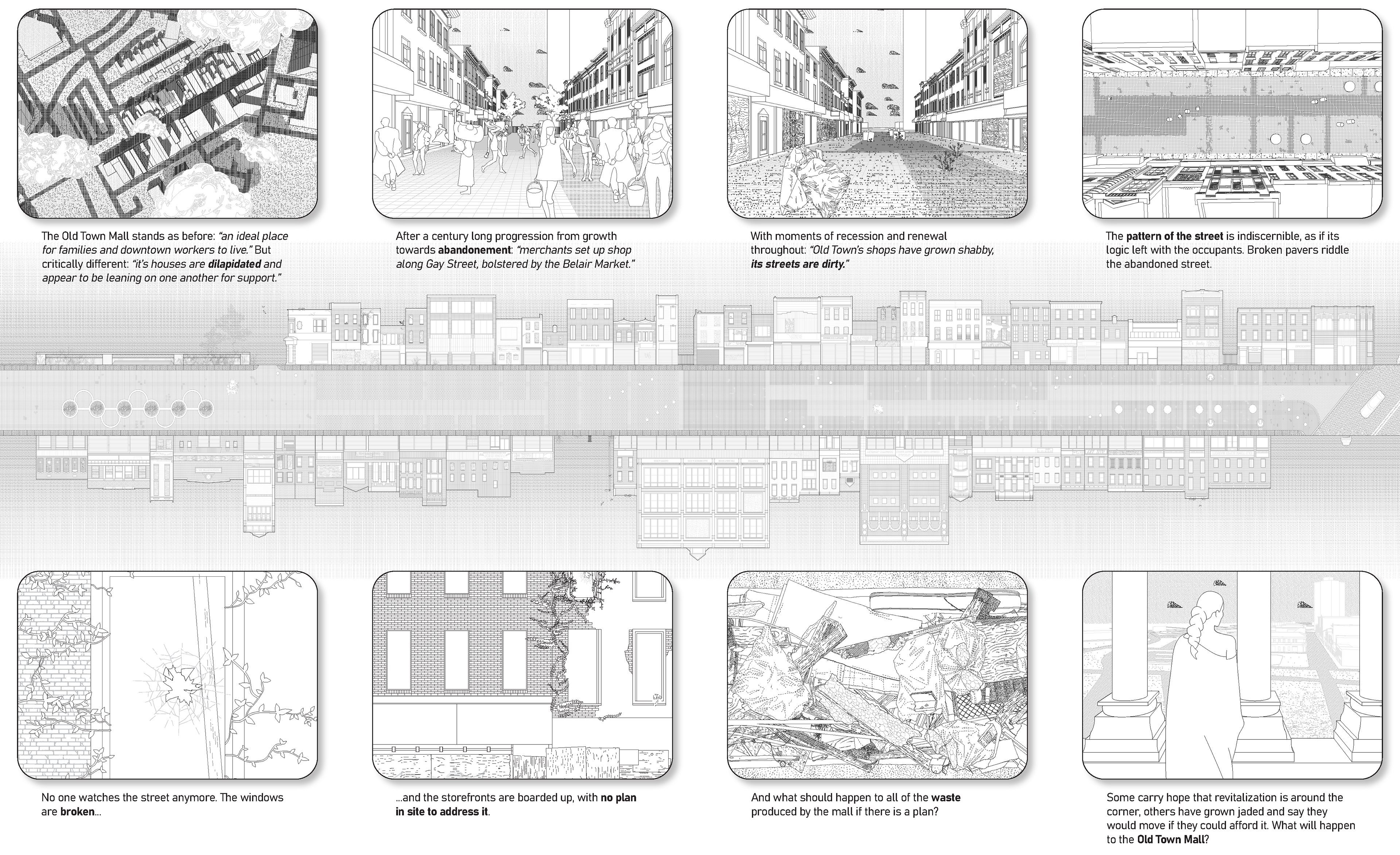
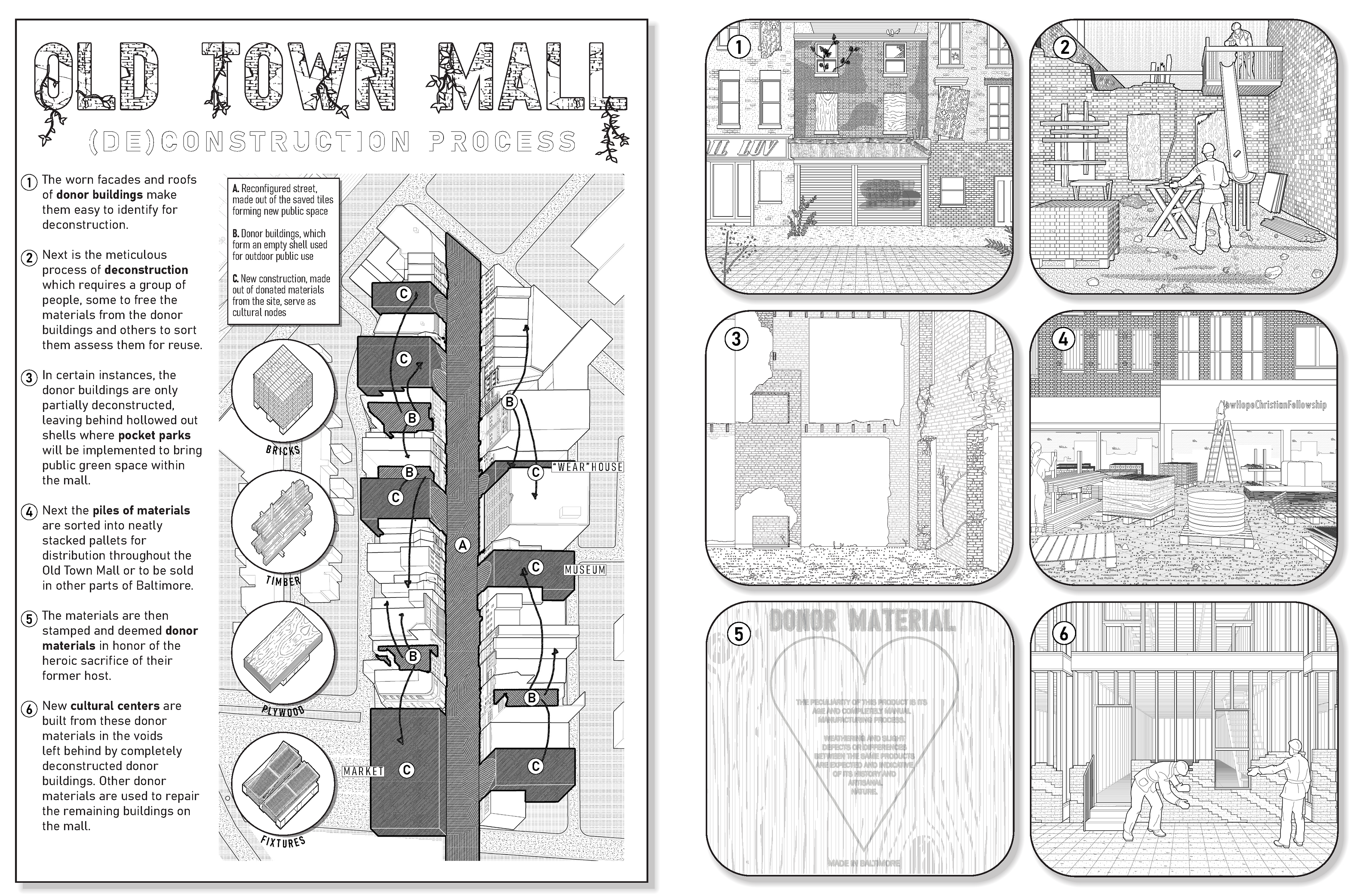
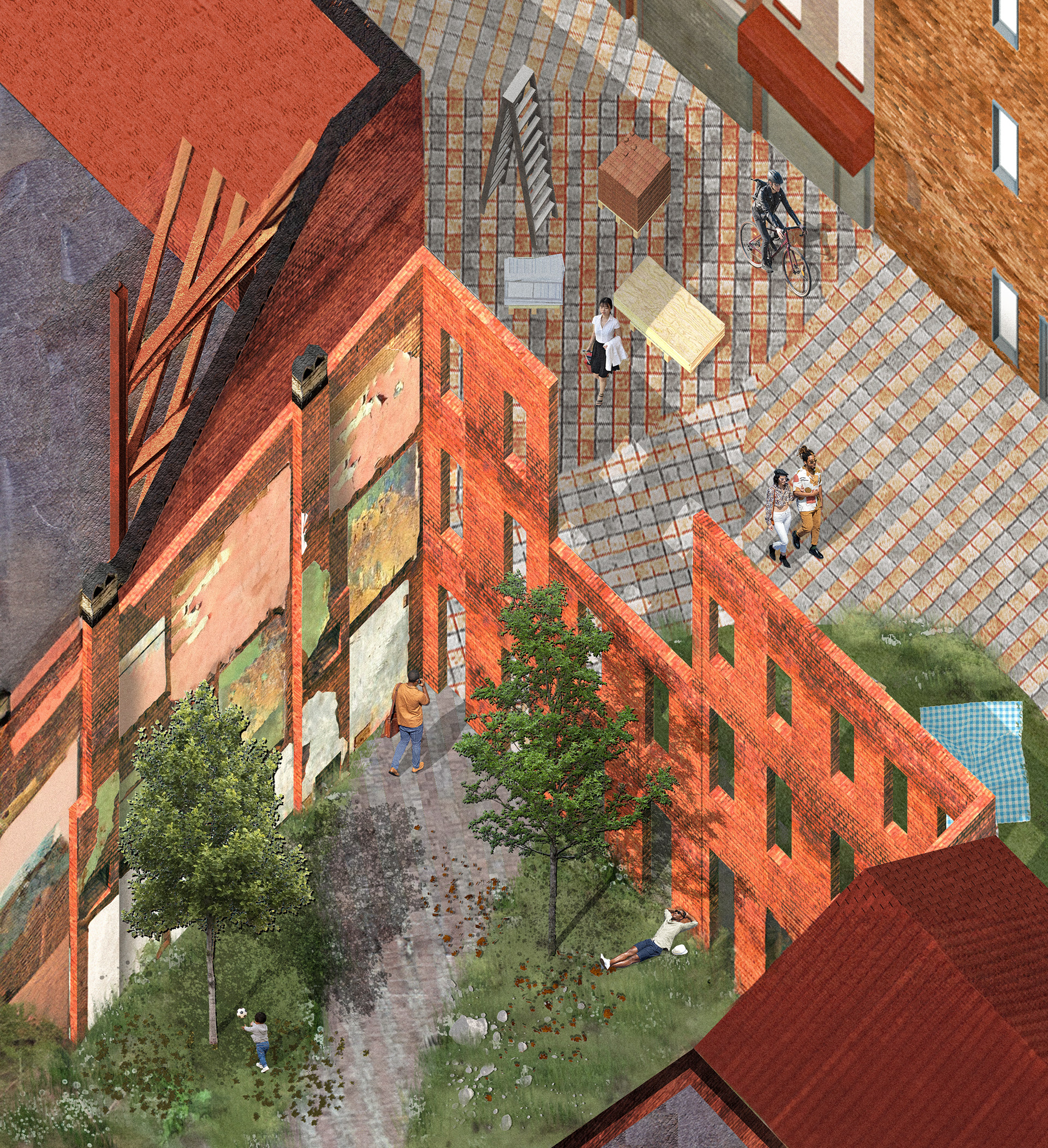
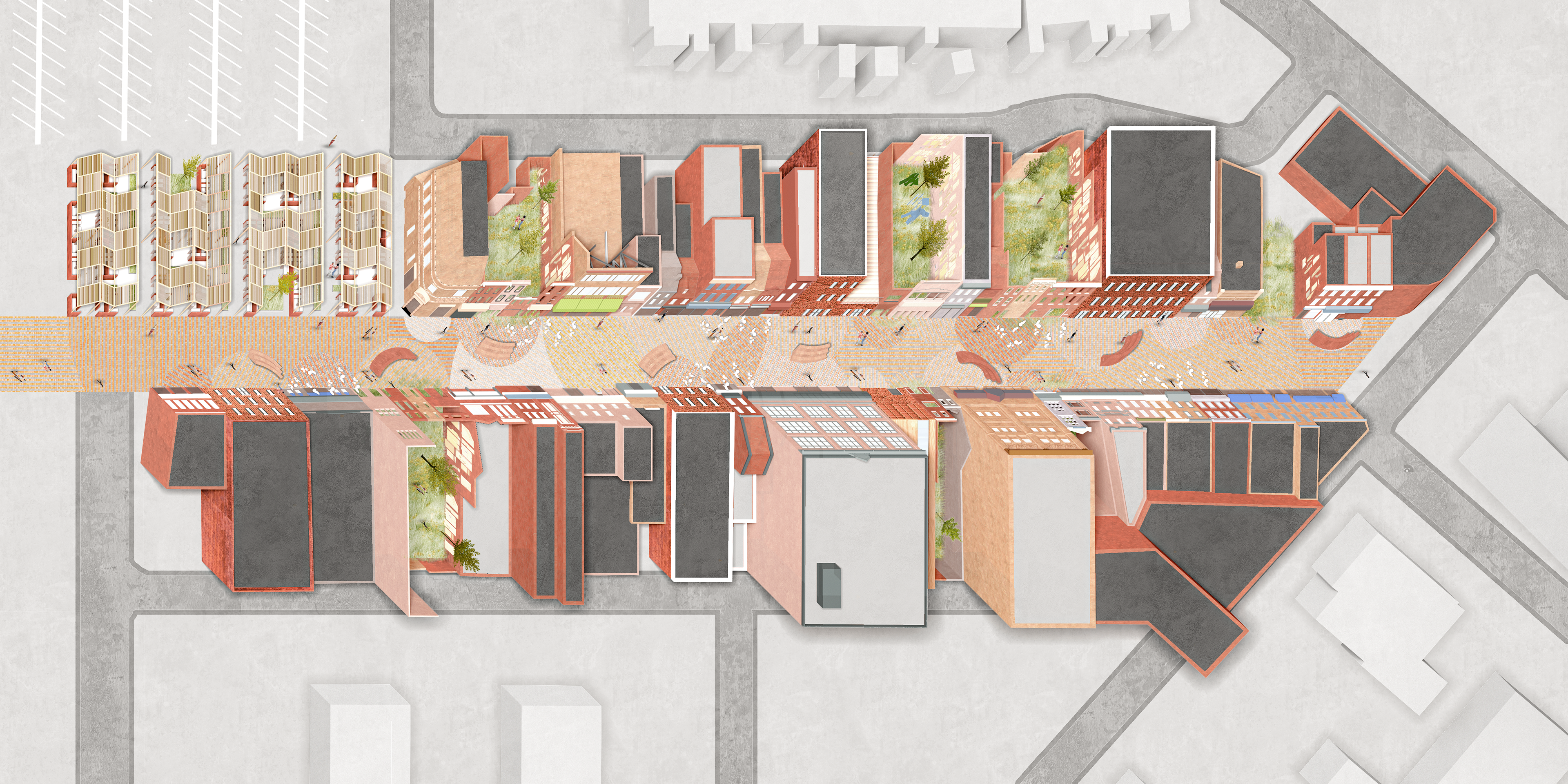
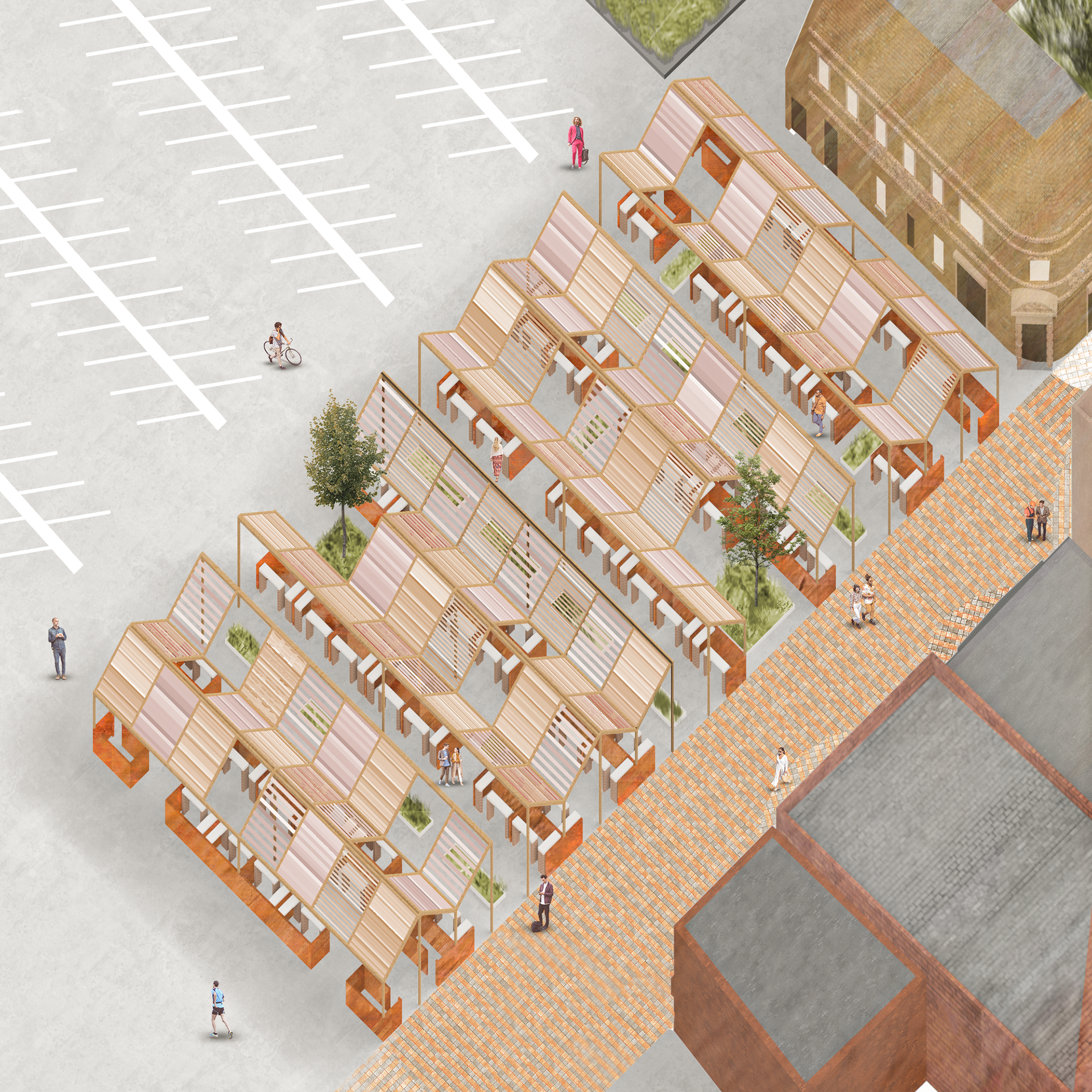
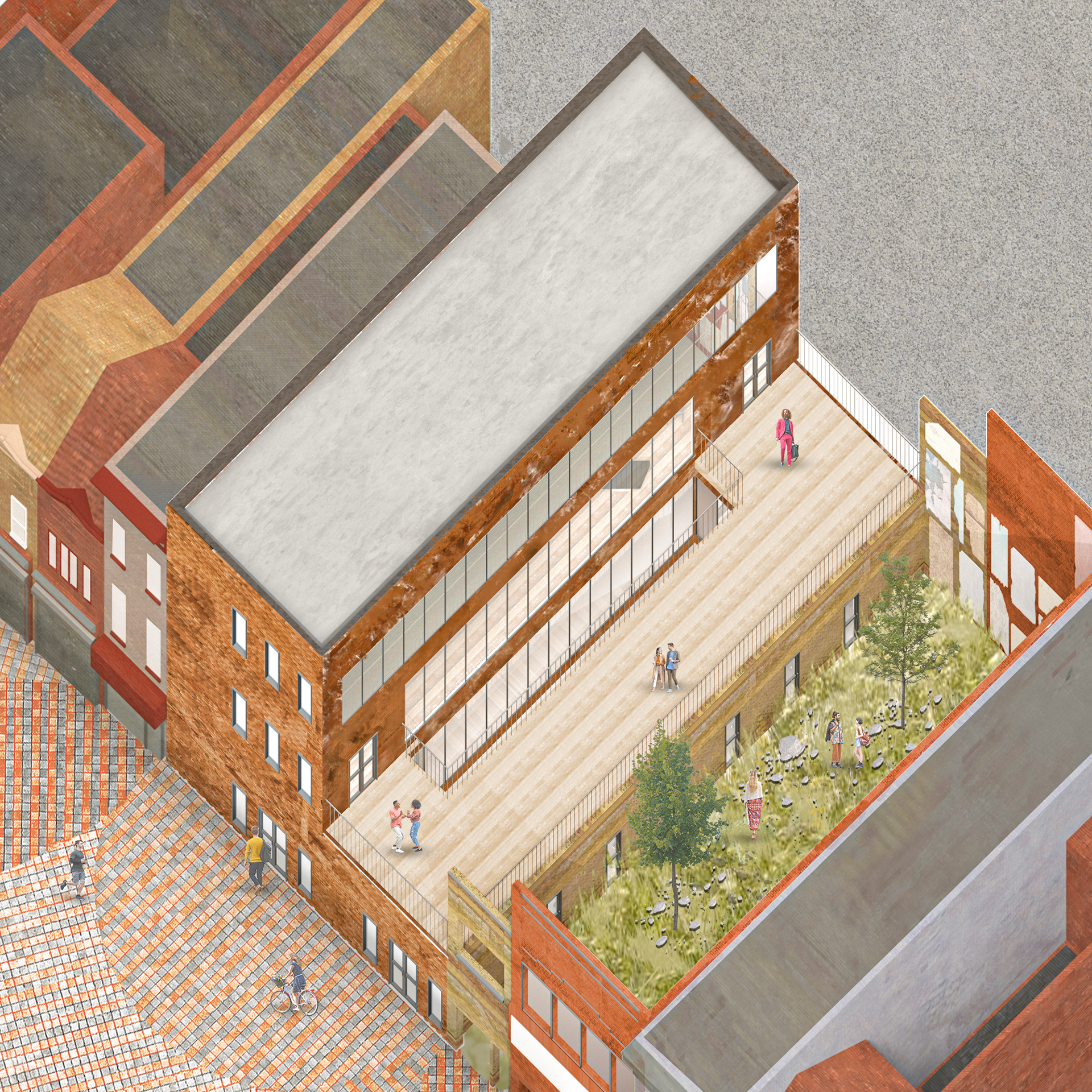
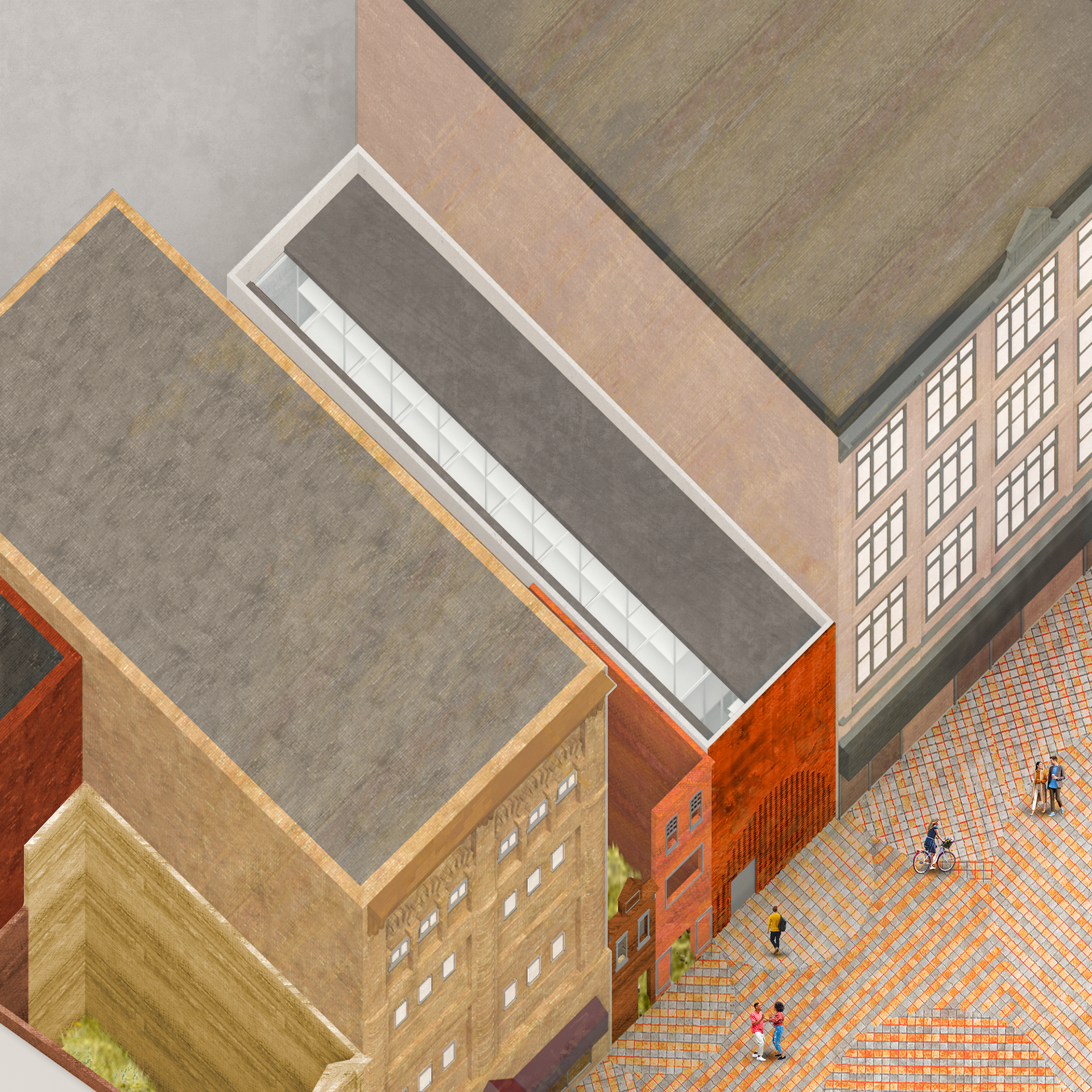
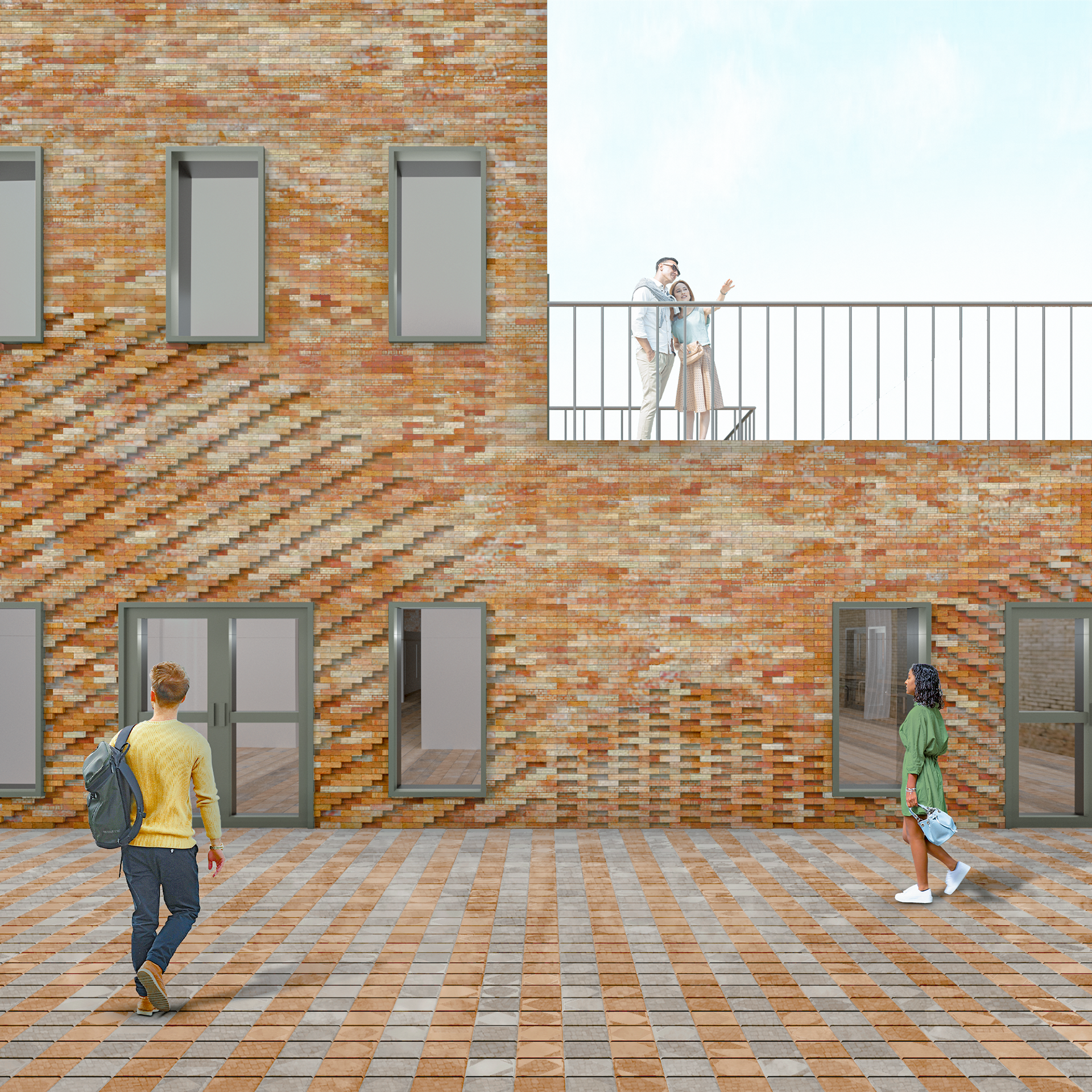
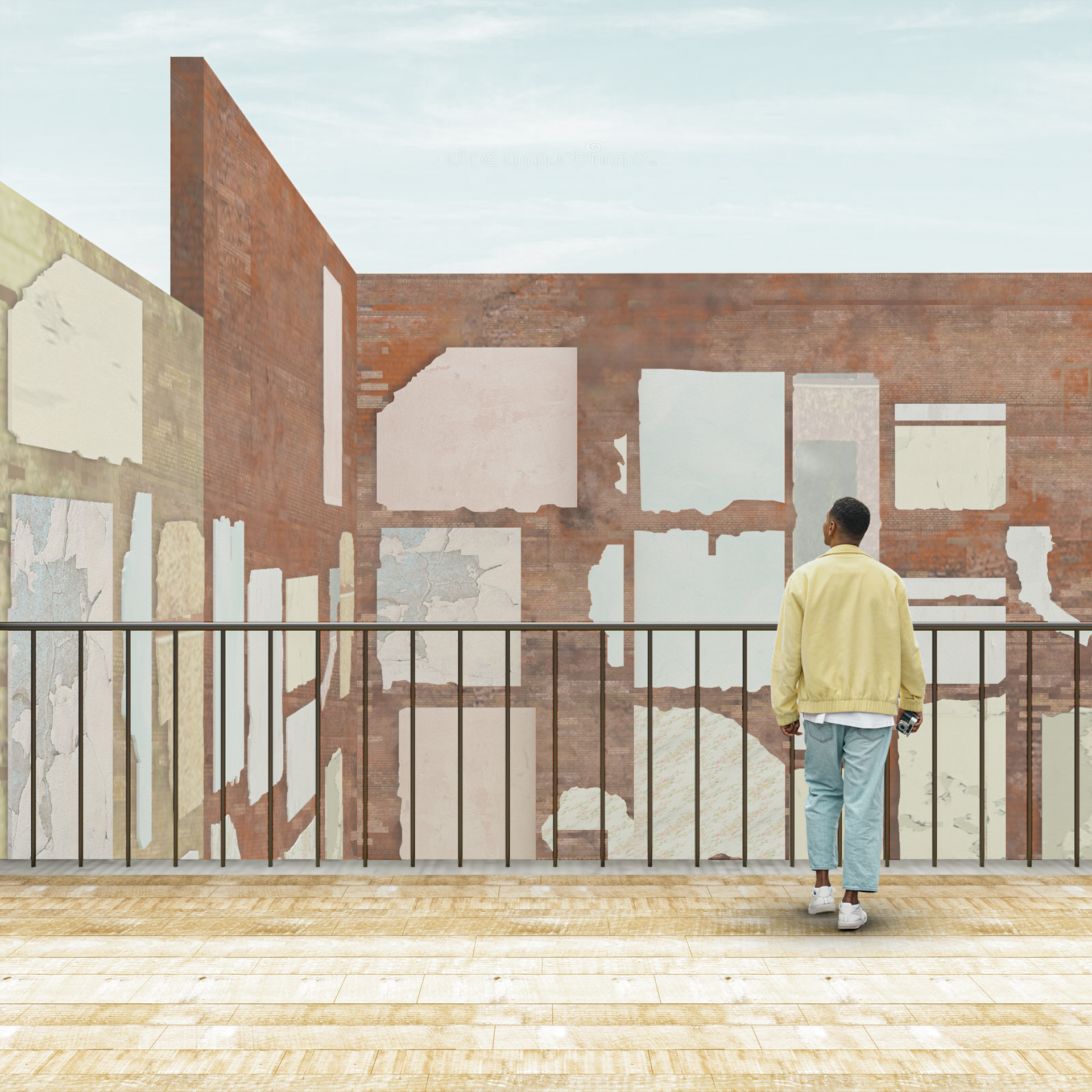
The Old Town Mall, located in Baltimore, Maryland, was once a cultural landmark, but throughout the years, this outdoor commercial zone has dwindled away. It is easy to imagine demolishing what remains of the Mall and putting new brick buildings in its place. But this practical assessment does not take into account immaterial qualities embedded in the materials from the Old Town Mall, qualities such as their history, cultural significance, and the memories associated with them. After all, these are not just any bricks; these were handmade and laid in Baltimore by Baltimoreans. As waste from construction and demolition increases, and the abandonment of Baltimore’s historic rowhouses increases, the need to rethink traditional views of waste becomes more urgent. Through radical material reuse, architecture has the ability to reposition perceptions of value, by bringing out latent immaterial qualities within used materials. We must sacrifice certain buildings in order to reuse their materials, thereby preserving the immaterial qualities within the materials. The deconstruction of one third of the buildings on the Old Town Mall creates the opportunity for: new green space for everyone, renovating the remaining buildings, building new cultural centers from the old materials, reinstating a market as a magnet to the site, and extrapolating upon the precedent of circular material use in Baltimore.